
Big brands can buy repetition. Small brands have to earn memory.
A box turned up at my place from Declan at Keating & Co. Condiments.
Think – Chilli Oils. Hot Sauces. Characters and names that included Funky Beast. Berserker. Weird little monsters. Loud colours. A handwritten note. Various products that appear designed to make bland food considerably better and tomorrow morning considerably worse.
// And before I’d even tasted the bloody things, I was already thinking about the brand…
Because here’s the problem with most brand-building advice… it’s right.
And completely fucking useless if you’re broke 💀💀💀
Build mental availability. Increase penetration. Build physical availability. Reach more category buyers. Create distinctive assets. Be consistent. Rinse, Repeat and Reap the Rewards.
// Most Excellent.
Now try doing that when Coca-Cola has a few billion dollars and you’ve got 300 Instagram followers, 500 jars in your garage and enough money left for either a market stall or your electricity bill LOL.
The rules don’t change when you’re small. Your weapons do.
A big brand can afford to be forgettable once because it can pay to interrupt you another 300 times. A small brand might get one shot. One shelf. One scroll. One box arriving at someone’s house. One mate pulling your bottle out at a BBQ.
// Or as encapsulated by the immaculate Poet of our modern time (Marshal Mathers): “You only get one shot, do not miss your chance to blow / This opportunity comes once in a lifetime”.
So that interaction needs to work fucking hard.
That’s what struck me about Keating & Co. It doesn’t look like a tiny condiment company desperately cosplaying as a multinational FMCG brand. It looks like itself. Weird characters. Clashing colours. Ridiculous names. Attitude. You might hate it. Good. At least you noticed it.
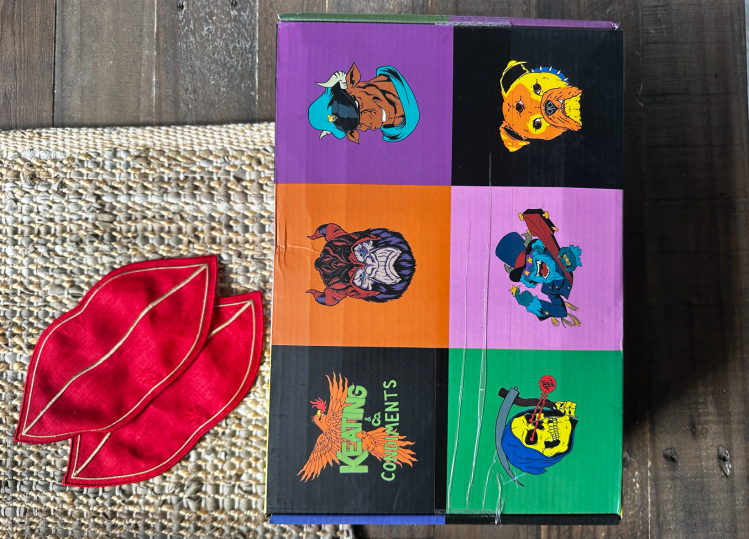
And that’s lesson one for small brands: stop trying to look big. Start trying to look unmistakably you.
// You probably can’t afford fame yet. But you can afford distinctiveness.
A name people remember. A colour you keep using. A character. A phrase. A packaging system. A point of view. Something you repeat so relentlessly that eventually somebody recognises you without needing to read the fucking logo.
Founders often get this backwards. They’re constantly changing things because “they’re bored” or feel like they need something “fresh”…. New packaging. New tone. New social template. New campaign idea. Meanwhile the customer has seen the brand twice…(if at all).
You’re sick of it., but they’ve barely met you.
// Then there’s differentiation. Different job entirely.
Differentiation gives me a reason to choose you. Distinctiveness helps me recognise you when I’m ready to choose.
If the sauce genuinely tastes different, brilliant. If there’s a different ingredient, process, format or philosophy, even better. But being better is fairly useless if nobody remembers which fucking jar was yours.
Then you need something worth talking about.
Small businesses obsess over followers because followers look like distribution. But the better question might be: what have you created that makes one human want to tell another human about you?
// “Pretty good chilli sauce” is dead on arrival.
“// You need to try this ridiculous thing called Funky Beast” has legs.
The product name is talkable. The packaging is talkable. The founder is talkable. The box is talkable. The market stall is talkable. The handwritten note is talkable. Someone leaving it on the table because the jar looks fucking cool is talkable.
When you can’t afford to buy much attention, make the things you already pay for carry more attention.
// And start smaller than your ego wants to.
You don’t need Australia to mentally associate your brand with “condiments”. Maybe you want a thousand people to associate you with the chilli oil that fixes boring eggs. Or dumplings. Or pizza night. Or the stupidly spicy thing you buy your mate who claims nothing is hot enough (aka me).
// That’s mental availability too.
You’re attaching the brand to a moment. Then another. Then another…
Must I go on to land this point?
Same goes for physical availability. No, you probably won’t launch nationally into Woolies tomorrow. But every market, independent grocer, restaurant, collaboration, online bundle and café puts you somewhere you weren’t yesterday.
And here’s where being small can actually be an advantage.
// You can borrow other people’s audiences.
A chef already has customers. A café already has foot traffic. A creator already has followers. Another small food business already has people who trust it.
Instead of asking, “How do we get 100,000 followers?”, maybe ask:
Who already has the next 100 people we need?
The smartest thing small brands can do isn’t ignore How Brands Grow because they can’t afford the textbook version.
It’s find cheaper ways of creating the same effects.
- You still need penetration.
- You still need memory.
- You still need availability.
- You still need distinctive assets.
- You still eventually need reach.
But before you start setting fire to money on Meta, perhaps make sure there’s actually something worth amplifying.
Find out what customers repeat back to you. What they reorder. What they photograph. What they tell their mates. What they call you. Where they use you. Why they choose you.
Paid media should pour petrol on something already burning. It shouldn’t be asked to set wet wood on fire.
Maybe that’s the real opportunity for small brands.
You can’t outspend the giants. So don’t.
Cool story bro, but WTF can we do then?
// Out-interest them.
// Out-personality them.
// Out-listen them.
// Move faster than them.
// Be closer to the customer than them.
// Make something people actually want to put on the table, photograph, remember and tell someone else about.
Because before you can afford share of voice, you need to earn share of memory.
And that’s what this little box from two blokes making condiments got me thinking about.
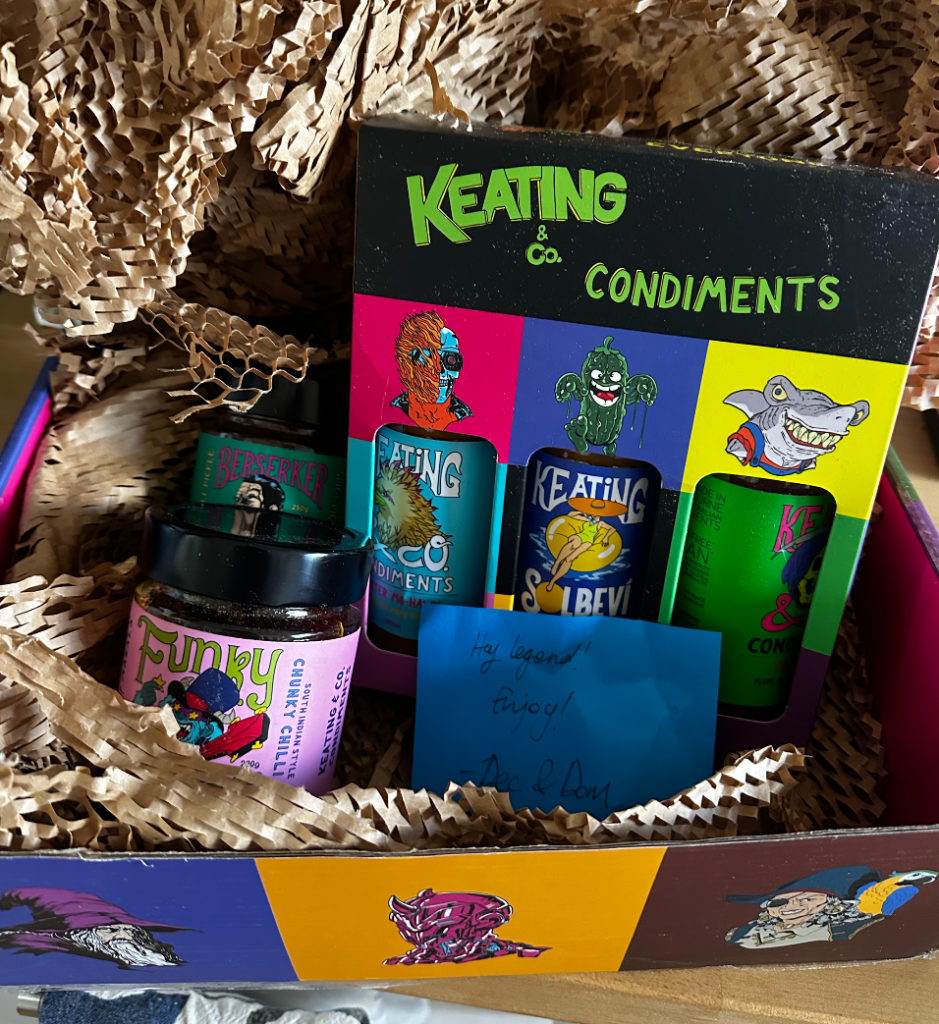
So, here’s a huge thank you to Declan the legend!
The chilli oil was excellent. My mouth is very grateful.
// My arse is yet to submit its review.
—
PS: Clarity is easy to talk about and surprisingly difficult to create. If your team is currently navigating complexity, competing priorities or strategic drift, I’d be happy to have a chat.
💀🖤
Cheers,
DANIEL JACOBS
http://bjornfox.com
https://www.linkedin.com/in/denialjacobs/
Melbourne, Australia

