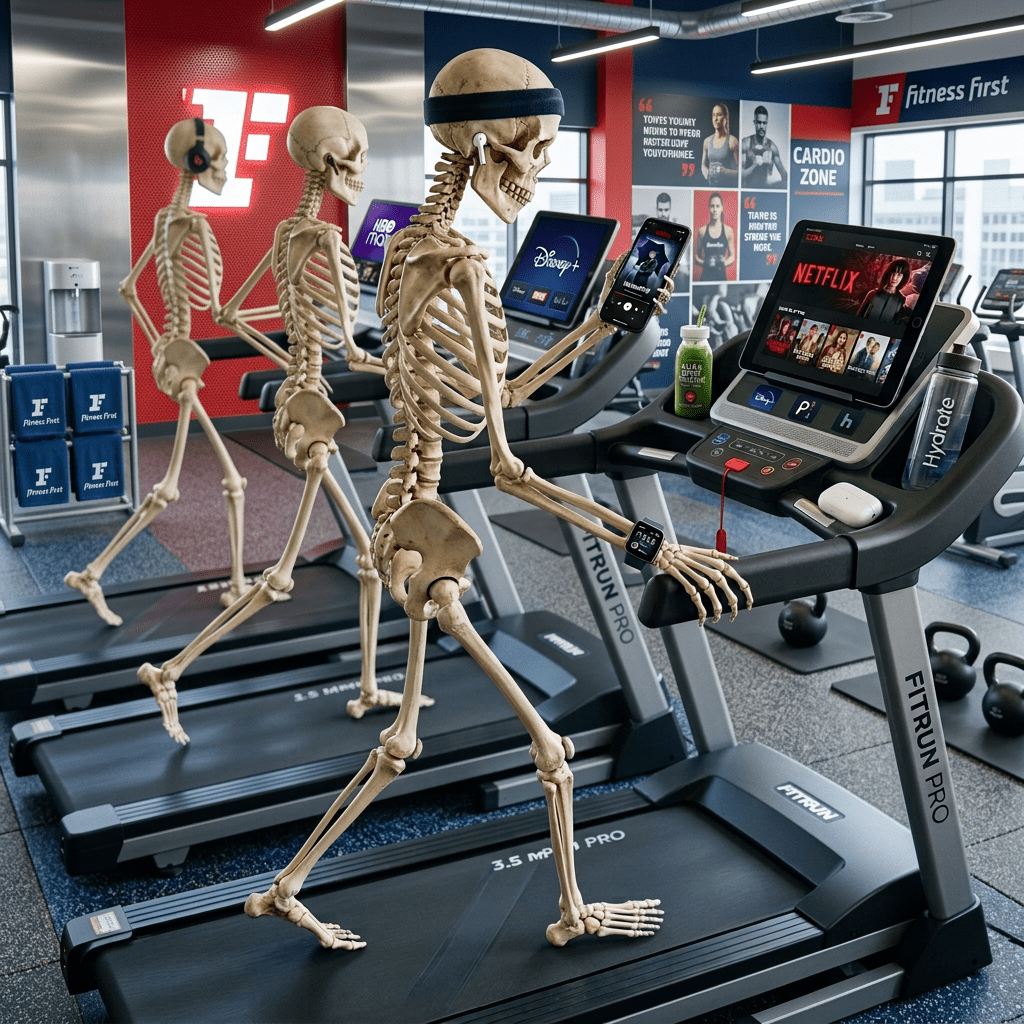
Everyone’s talking about the cost of living.
I think we’re asking the wrong question.
What if the problem isn’t just that everything costs more? What if there are simply more things to spend money on than at any other point in history?The Meta algorithm Gods presented to me a Sunrise segment (a popular morning breakfast show here in Australia) earlier this morning about “The Rise of Side Hustles in Australia“.
Nearly half of Australians now have one…
Some are doing it to get ahead, some are saving for travel, but many are simply trying to keep up with the rising cost of living.
// As a strategist, I almost switched off from the story itself and headed straight to the comments. That’s often where the real insight lives. People are less polished, more honest, and far more likely to reveal what they’re actually thinking than they are in a research group or survey. It’s messy, but it’s rich.
// One comment stood out.
Someone argued that there was nothing new here because people have always worked second jobs. They’re right. My parents’ generation did. My grandparents’ generation certainly did. But what they pointed out that people are turning what used to be treats into everyday habits…
But I don’t think what’s changed is the need to earn more. I think what’s changed is what we’re trying to fund.
THE EXPLOSION OF CONSUMPTION
Every generation has faced financial pressure. Housing has always been expensive for someone. Inflation isn’t unique. Economic uncertainty certainly isn’t.
// But this generation is the first to live in a world where entirely new categories of consumption have emerged in the space of a couple of decades.
Before the internet, life was… simpler.
Not necessarily better, just simpler.
You had a watch because you needed to know the time. You had a phone because you needed to call someone. If you wanted takeaway, you drove to pick it up. Coffee was something you mostly made at home. Going out for dinner wasn’t something you did because you couldn’t be fucked cooking – It was an occasion or a special event. TV was whatever happened to be on – which was often hit and miss. If you missed your favourite show because you were out kicking a ball around with your mates, – well, that’s shit bad luck for you. There was no pause, rewind or “start from the beginning”. You waited until next week, or you missed it altogether.
It’s funny how the ad breaks were almost part of the ritual.
Someone would yell, “Quick! Ads!” and suddenly everyone was sprinting to the toilet or the kitchen before the movie came back on. Looking back, it’s ridiculous and an experience no one will ever have to face in this lifetime and beyond.
But at the time, it was just life.
// Those constraints shaped our behaviour in ways we probably didn’t appreciate. We planned around them. We accepted them. We found other ways to spend our time.
CONVENIENCE BECAME A BUSINESS MODEL
Fast forward to today and we’ve quietly built an economy around removing friction from almost everything.
Can’t be fucked cooking?
No worries, there’s Uber Eats.
Don’t want ads?
Cool, just pay for Premium.
Don’t like what’s being served on Free-to-air TV?
Sweet, just hit Subscribe and spend hours deciding on what to watch…
Don’t want to wait for your grocery run?
Same-day delivery…
Don’t want to remember anything?
Buy iCloud storage.
—
Individually, none of these things seem particularly expensive. Most are less than the cost of lunch. Collectively, though, convenience has become its own category of spending.
It’s death by a thousand subscriptions.
Netflix. Stan. Disney+. Spotify. ChatGPT. iCloud. Google Drive. Amazon Prime. Uber One. Gym memberships. Pilates. Coffee on the way to work. Food delivery fees. Service fees. Processing fees.
None of these existed for my parents when they were trying to buy their first home.
It’s fucking fascinating. We’re not just spending more because prices have increased. We’re spending more because there are simply more things to spend money on.
WHAT IF WE LIVED LIKE IT WAS 1998?
This isn’t one of those lazy “stop buying smashed avo” arguments. They’re intellectually bankrupt because they reduce a complex economic problem to personal discipline.
I’m interested in something much more behavioural.
What if someone decided to live exactly as Australians did before smartphones and the subscription economy?
Coffee at home.
Free-to-air TV.
The one Home telephone line… *shudders*
Cooking most nights.
Going for a run,
—
What if someone under 30 lived exactly as Australians did in 1998 for twelve months?
No subscriptions.
NOw… Imagine what would happen?
Would they save $5,000 a year?
$10,000?
$20,000?
// I genuinely don’t know.
But I’d love to find out.
Not because I think everyone should reject modern life, but because I wonder whether we’ve become so accustomed to paying for convenience that we no longer recognise it as discretionary spending.
THE REAL COST OF MODERN LIVING
Maybe the conversation about the cost of living has been framed too narrowly. We talk about inflation, Interest rates, Housing affordability.,Wages etc.
// They’re all real issues.
But what if the cost of living isn’t just about what things cost anymore? What if it’s also about how many things now exist to consume?
Every decade creates new products and services.
The digital era created entirely new categories of consumption.
Maybe that’s the hidden story. Not that life has become more expensive.
// But that modern life has become more expensive to participate in.
And I can’t help wondering whether, in solving so many of life’s little inconveniences, we’ve quietly created a generation that’s paying for convenience without ever stopping to ask what it’s was actually worth.
—
PS: Clarity is easy to talk about and surprisingly difficult to create. If your team is currently navigating complexity, competing priorities or strategic drift, I’d be happy to have a chat.
💀🖤
Cheers,
DANIEL JACOBS
http://bjornfox.com
https://www.linkedin.com/in/denialjacobs/
Melbourne, Australia

