I’ve written something before about Opinions & Assholes (everyone has one)…
I couldn’t help myself for this next blog post… 💀
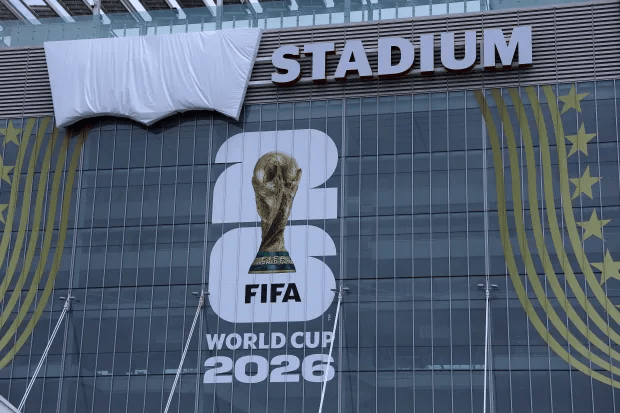
I’ve watched the Levi’s Stadium conversation unfold this week and honestly, I think most people have completely missed the fucking point.
The hot takes have been “predictable” and bland…
“They should have wrapped it in denim. They should have integrated the stitching. They should have referenced the back pocket. They should have made the architecture feel more Levi’s”. They should have, they should have, they should have.
And whilst opinions are like assholes (i.e. everyone has one), what fascinates me is that nearly all of the commentary has focused on what Levi’s could have added, rather than recognising what they’ve already built.
Because the fact that Levi’s didn’t need to do any of those things is precisely why it’s such a powerful example of branding.
One of the biggest misconceptions in our industry is that brands grow because they attract attention. They don’t. Attention is important, but attention is fleeting. Memory is what matters. The strongest brands in the world understand that their job isn’t simply to get noticed today. Their job is to be remembered tomorrow.
When people saw Levi’s Stadium, they weren’t seeing a naming rights deal. They were seeing the accumulated effect of more than 170 years of disciplined brand building. They were seeing the result of decades spent investing in distinctive assets, memory structures and cultural meaning that have become inseparable from the brand itself. The red tab. The stitching. The leather patch. The horses. The silhouette of a 501. The colour red. The role the brand has played across generations, subcultures and communities. All of these things compound over time.
The irony is that the same people arguing Levi’s should have leaned harder into these assets are unknowingly proving how effective those assets already are. The fact they can immediately recall them, reference them and imagine them being used is evidence that the work has already been done.
That’s what strong brands do. They create shortcuts in our minds. They become familiar. Instantly recognisable. Easy to retrieve.
What many newer brands get wrong is that they’re obsessed with standing out. They chase trends, aesthetics, cultural moments, algorithms, colours, typography systems and whatever the latest platform is rewarding. Every few years the industry collectively falls in love with something new. Minimalism. Maximalism. Millennial pink. Brat green. Whatever happens to be fashionable at the time. The problem is that trends create attention, but assets create memory. One is rented. The other is owned.
I’ve always believed being distinctive is more important than being different.
Different is easy. Different can be copied. Different often disappears the moment the next trend arrives. Distinctiveness is much harder because it requires consistency. It requires repetition. It requires discipline. It requires organisations to continue investing in the same signals long after marketers have become bored of them.
That’s another uncomfortable truth. Marketers often confuse boredom with ineffectiveness. We spend every day immersed in brands, campaigns and assets. Consumers don’t. What feels repetitive to us often feels familiar to them. What feels old to us is often what makes a brand easy to recognise in the first place.
Levi’s didn’t become an icon because they reinvented themselves every few years. They became an icon because they understood what was worth protecting. They understood that familiarity is not the enemy of creativity. Familiarity is one of the most valuable assets a brand can own.
The real lesson from Levi’s Stadium isn’t that they should have done more. It’s that they didn’t have to. The strongest brands eventually reach a point where the logo gets smaller, the branding gets quieter and the impact gets bigger. Not because they’re doing less work, but because they’ve already spent decades doing the hard work.
To me, that’s not a missed opportunity. That’s the reward.
—
PS: Clarity is easy to talk about and surprisingly difficult to create. If your team is currently navigating complexity, competing priorities or strategic drift, I’d be happy to have a chat.
💀🖤
Cheers,
DANIEL JACOBS
http://bjornfox.com
https://www.linkedin.com/in/denialjacobs/
Melbourne, Australia
 THE CREATIVE STRATEGIST